Main Logo Event Logo

A Night of Generosity: Aghosh UK at the APPNE Annual Gala 2026
A Night of Generosity: Aghosh UK at the APPNE Annual Gala 2026

A Night of Generosity: Aghosh UK at the APPNE Annual Gala 2026

The Aghosh UK team at their stand at the APPNE Gala Dinner 2026

The Aghosh UK team at the Alkhidmat Foundation and Aghosh UK stand on the night.

We had a great evening at the APPNE Gala Dinner 2026, held as part of the 7th Annual Convention of the Association of Pakistani Physicians of Northern Europe (APPNE). Aghosh UK, the UK partner of Alkhidmat Foundation, booked a fundraising table at this year's gala, an occasion that brought together doctors, community leaders and charity representatives from across the UK and Northern Europe for an evening of fellowship and giving.

Thank you to everyone who stopped by our table to chat with the team, and to everyone who gave generously on the night in support of orphans in Pakistan and Gaza. JazakAllah khair, may Allah reward your generosity and accept it from you.

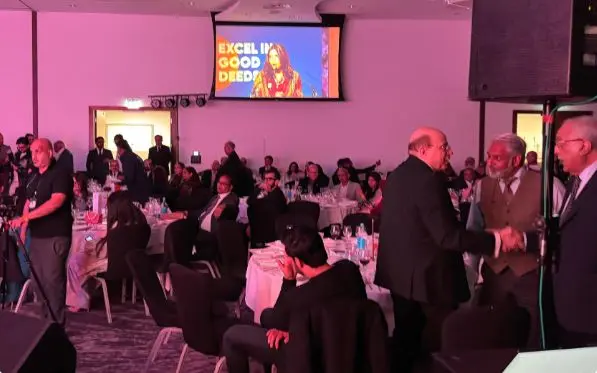
Guests seated at tables during the APPNE Gala Dinner 2026, with the Excel in Good Deeds screen in the background

Guests at the APPNE Gala Dinner 2026, underneath the evening's "Excel in Good Deeds" theme.


An Evening in Support of Orphans in Pakistan and Gaza

As a fundraising partner on the night, Aghosh UK was proud to take part in an evening that brought together doctors and community leaders from across the UK and Northern Europe, with fundraising running throughout. Taking a table at events like the APPNE Annual Gala matters because it brings Aghosh UK face to face with the wider British Pakistani community, many of whom already give generously through Zakat, Sadaqah and regular sponsorships. Every conversation at our table, and every donation made on the night, goes directly towards the food, healthcare, education and shelter that vulnerable children depend on through our Orphan Care Programme.

Aghosh UK's Orphan Care Programme, at a Glance

Our Orphan Care Programme currently supports orphans in Pakistan and Gaza. It provides orphaned children with quality education, full healthcare, nutritious meals and safe shelter, so that losing a parent does not also mean losing a childhood.

Orphan Care Pakistan

Sponsorship starts from £30 a month and is Zakat eligible. More than 34,000 orphans have been supported through this programme to date.

Orphan Care Gaza

Aghosh UK is also working to sponsor 5,000 orphans in Gaza, with over 1,500 children already supported through the appeal so far.

Dr Adeel Riaz on Aghosh UK's Mission

Our Chairman, Dr Adeel Riaz, addressed guests at the gala about the work of Aghosh UK - Alkhidmat Foundation and how the charity runs its Orphan Care Programme across the UK. He spoke about the partnership between Aghosh UK and Alkhidmat Foundation Pakistan, and how sponsorships raised here in Britain translate into everyday essentials, school fees, medical care and safe housing, for orphaned children in Pakistan and Gaza.

The Prophet ﷺ said:
"I and the sponsor of an orphan will be like this in Paradise," and he gestured with his index and middle fingers, holding them slightly apart.
Sahih al-Bukhari, 5304
Guests on stage speaking to the room during the orphan sponsorship appeal at the APPNE Gala Dinner 2026

Dr Adeel Riaz, Aghosh UK Chairman, addresses the guests at the APPNE gala


The History and Mission of APPNE

APPNE, known to its community as Team APPNE, was launched in 2019 to bring doctors and physicians of Pakistani heritage together on one platform, and held its first annual gathering in Manchester in March 2020. Since then it has grown into a democratic, representative organisation and describes itself as the voice for doctors of Pakistani heritage living in Northern Europe, with elected regional representatives across 16 UK regions and Northern Ireland. The organisation is governed by a national board chosen through democratic elections, currently led by President Dr Amir Khan for the 2023 to 2025 term, alongside a general secretary, finance secretary and a wider executive committee.

APPNE's stated mission is to support, advise and mentor its members, to raise the professional profile of doctors of Pakistani heritage, and to help develop healthcare education and infrastructure in both the UK and Pakistan. Alongside its Annual Gala and Conference, this has included an International Medical Graduate task force, career guidance and mentoring programmes, and support for the wider Pakistani-heritage medical community, including during the Covid-19 pandemic.

Team APPNE's National Board (2023 to 2025 Term)

APPNE's current national board is made up of:

  • Dr Amir Khan - President (Consultant General Surgeon)
  • Dr Nadeem Sajjad Raja - General Secretary (Consultant Microbiologist)
  • Dr Aisha Sharif - Finance Secretary
  • Dr Sohail Qureshi - Joint Secretary
  • Dr Kamila Haider - Social Secretary
  • Dr Habib Haider - Education Lead (Consultant in Acute Medicine)

They are supported by a wider executive committee: Dr Samreen Muzaffer, Dr Mukesh Kumar, Dr Amara Sohail, Dr Mazhar Sheikh, Dr Naseem Warraich, Dr Mohammad Imran, Dr Aadil Karim, Dr Wajiha Tehniyat and Dr Zafar Iqbal, alongside elected regional representatives across the UK and Northern Ireland.

Aghosh UK: Fundraising at the Gala

This year, Aghosh UK booked a fundraising table at the APPNE Gala Dinner 2026, held as part of Team APPNE's 7th Annual Convention, a natural pairing between an organisation representing Pakistani-heritage doctors across Northern Europe and a charity delivering healthcare, education and orphan care in Pakistan and Gaza. The gala regularly welcomes charities and community organisations, making it a fitting setting for Aghosh UK to share the story of the Orphan Care Programme with a wider audience.

Partnerships of this kind matter for orphaned children long after the evening ends. Awareness raised at events like this gala helps Aghosh UK reach new supporters who go on to sponsor a child, give Zakat, or simply share our appeals with their own communities.

An Aghosh UK team member speaking with a guest at the Aghosh UK and Alkhidmat Foundation stand at the APPNE Gala Dinner 2026

The Aghosh UK stand, where the team spoke to guests throughout the evening.

Frequently Asked Questions

What is the APPNE Annual Gala?

The APPNE Annual Gala, held in 2026 as the APPNE Gala Dinner as part of Team APPNE's 7th Annual Convention, is the flagship yearly event of the Association of Pakistani Physicians of Northern Europe (APPNE), the largest organisation representing doctors of Pakistani heritage across Northern Europe. It brings together medical professionals, community leaders and charities for an evening of celebration, networking and fundraising for shared causes.

Who is Dr Adeel Riaz?

Dr Adeel Riaz is the Chairman and Chair of Trustees of Aghosh UK - Alkhidmat Foundation. At the APPNE Annual Gala 2026, he spoke to guests about the charity's work and its Orphan Care Programme across the UK.

What does Aghosh UK's Orphan Care Programme provide?

The programme provides orphaned children with education, healthcare, nutritious meals and safe shelter, restoring a sense of stability and hope to children who have lost one or both parents.

How can I sponsor an orphan through Aghosh UK?

You can sponsor an orphan in Pakistan from £30 a month, or support an orphan in Gaza, through Aghosh UK's Orphan Care appeals. Both options can be set up as a single donation or a regular monthly sponsorship.

Does sponsoring an orphan qualify as Zakat?

Yes. Orphan sponsorship through Aghosh UK is Zakat eligible, so eligible donors can fulfil their Zakat obligation while directly supporting a child's education, healthcare and wellbeing.

Is Aghosh UK a registered charity?

Yes. Aghosh UK is a registered charity, charity number 1178778.

Did Aghosh UK sponsor the whole of the APPNE Annual Gala 2026?

No. Aghosh UK booked a fundraising table at the APPNE Gala Dinner 2026, held as part of Team APPNE's 7th Annual Convention, where the team spoke with guests and collected donations for orphans in Pakistan and Gaza.
Nasheed Nights Tour: Echoes of Kindness

Nasheed Nights Tour: Echoes of Kindness

Nasheed Nights Tour: Echoes of Kindness

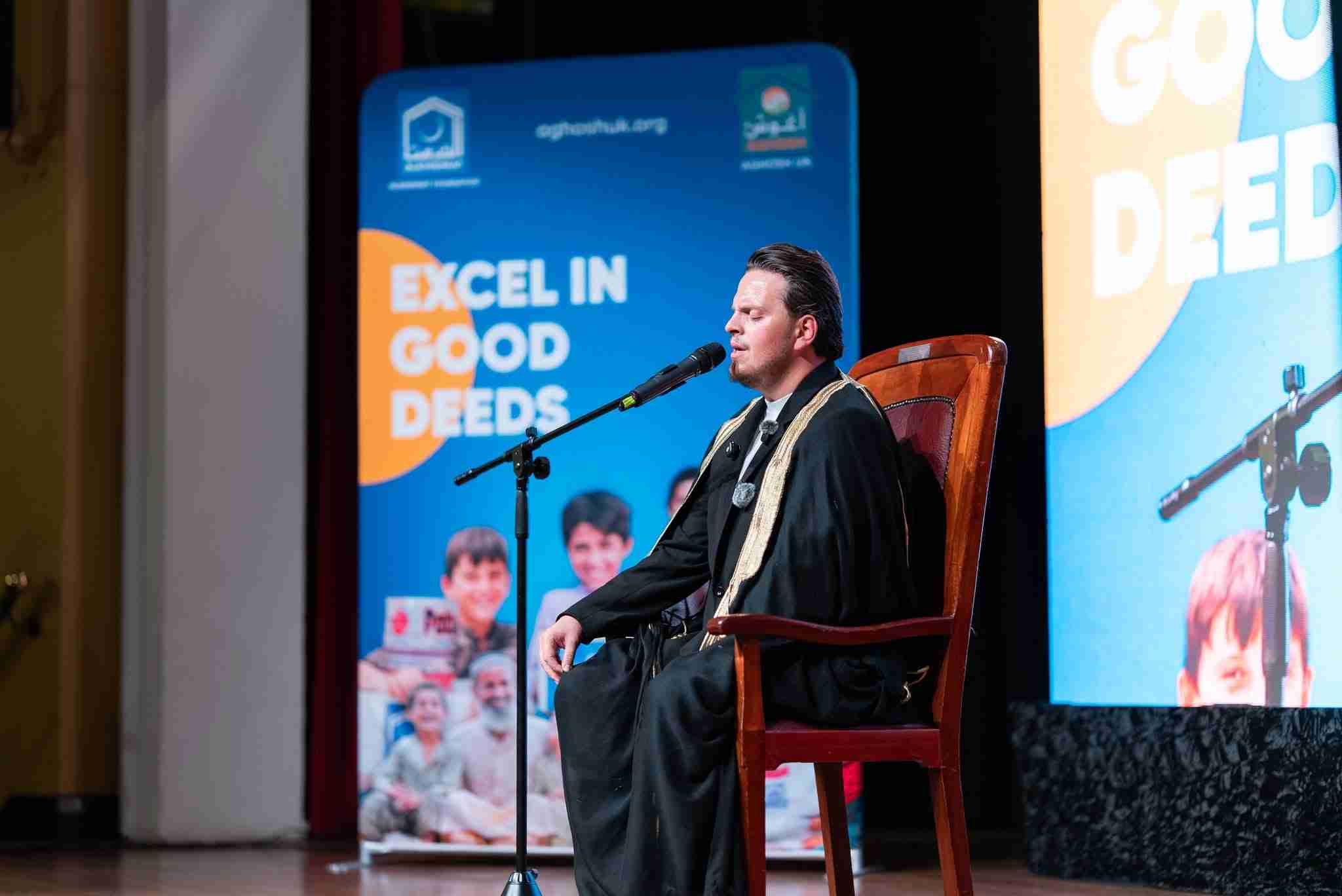
Nasheed artist Egzon Ibrahimi performing a seated recitation during the Nasheed Nights Tour: Echoes of Kindness

Egzon Ibrahimi performs during the Nasheed Nights Tour.

This September, Aghosh UK took our Nasheed Nights Tour, Echoes of Kindness, to four cities across the UK, Manchester, London, Birmingham and Glasgow, bringing nasheed artists Muad and Qari Egzon Ibrahimi together for an evening of recitation, reminders and fundraising in support of orphans in Pakistan and Gaza.

At each stop, our Chairman, Dr Adeel Riaz, addressed the audience about Aghosh UK's Orphan Care Programme and how every ticket, donation and sponsorship made on the night goes directly towards the education, healthcare and shelter that orphaned children depend on. Families filled venues in all four cities for an evening that mixed moving recitation with lively, family-friendly nasheeds for younger guests.


A Night of Recitation and Remembrance

Egzon Ibrahimi, a Qur'an reciter from Kosovo known for his command of tajwid and maqam, the disciplines governing correct pronunciation and the melodic modes used in Qur'anic recitation, brought a moment of stillness to each evening. His recitation, performed in the traditional seated style, was one of the most reflective parts of the night across all four cities.

Aghosh UK Chairman Dr Adeel Riaz speaking at the podium during the Nasheed Nights Tour: Echoes of Kindness

Aghosh UK Chairman Dr Adeel Riaz addresses the audience during the Nasheed Nights Tour.

Nasheeds for Every Generation

Nasheed artist Muad brought a different energy to the stage, stepping down among the children in the audience for a series of lively, call-and-response nasheeds that had younger guests singing and clapping along in every city on the tour.

Nasheed artist Muad performing with children on stage during the Nasheed Nights Tour: Echoes of Kindness

Muad performs with children on stage during the Nasheed Nights Tour.

On Stage Across Four Cities

  • Manchester – Friday 18 September 2026
  • London – Saturday 19 September 2026
  • Birmingham – Sunday 20 September 2026
  • Glasgow – Saturday 26 September 2026

Every night featured nasheed artists Muad and Egzon Ibrahimi, with Aghosh UK Chairman Dr Adeel Riaz speaking on behalf of the charity.

An Evening in Support of Orphans in Pakistan and Gaza

Every Nasheed Nights Tour evening was held in aid of Aghosh UK's Orphan Care Programme, which supports orphaned children in Pakistan and, through Alkhidmat Foundation, in Gaza. From the opening recitation to the closing appeal, each city's audience was invited to sponsor an orphan or give what they could towards the appeal.

A packed audience at one of the Nasheed Nights Tour: Echoes of Kindness venues

A packed audience at one of the Nasheed Nights Tour venues.

Aghosh UK's Orphan Care Programme, at a Glance

Our Orphan Care Programme runs across the UK and, through Alkhidmat Foundation, in Pakistan and Gaza. It provides orphaned children with quality education, full healthcare, nutritious meals and safe shelter, so that losing a parent does not also mean losing a childhood.

Orphan Care Pakistan

Sponsorship starts from £30 a month and is Zakat eligible. More than 34,000 orphans have been supported through this programme to date.

Orphan Care Gaza

Aghosh UK is also working to sponsor 5,000 orphans in Gaza, with over 1,500 children already supported through the appeal so far.

Nasheed artist Muad singing among children in the audience during the Nasheed Nights Tour: Echoes of Kindness

Muad singing among the children in the audience.

Event Highlights Gallery

A glimpse into the memorable moments from our Nasheed Nights Tour across the UK.

Frequently Asked Questions

What was the Nasheed Nights Tour: Echoes of Kindness?

Echoes of Kindness was Aghosh UK's 2026 Nasheed Nights Tour, held across four UK cities in September, featuring nasheed artists Muad and Qari Egzon Ibrahimi in aid of orphans in Pakistan and Gaza.

Which cities did the tour visit?

The tour visited Manchester (18 September), London (19 September), Birmingham (20 September) and Glasgow (26 September) 2026.

Who performed at the Nasheed Nights Tour?

Nasheed artists Muad and Qari Egzon Ibrahimi performed at every city on the tour, with Aghosh UK Chairman Dr Adeel Riaz speaking about the charity's work at each event.

What does Aghosh UK's Orphan Care Programme provide?

The programme provides orphaned children in Pakistan and Gaza with education, healthcare, nutritious meals and safe shelter, restoring a sense of stability and hope to children who have lost one or both parents.

How can I sponsor an orphan through Aghosh UK?

You can sponsor an orphan in Pakistan from £30 a month, or support an orphan in Gaza, through Aghosh UK's Orphan Care appeals. Both options can be set up as a single donation or a regular monthly sponsorship.

Is Aghosh UK a registered charity?

Yes. Aghosh UK - Alkhidmat is a registered charity in England and Wales (no. 1178778), working in partnership with Alkhidmat Foundation Pakistan.

Aghosh UK at the Scottish Muslim Awards 2026

Aghosh UK at the Scottish Muslim Awards 2026

Aghosh UK at the Scottish Muslim Awards 2026

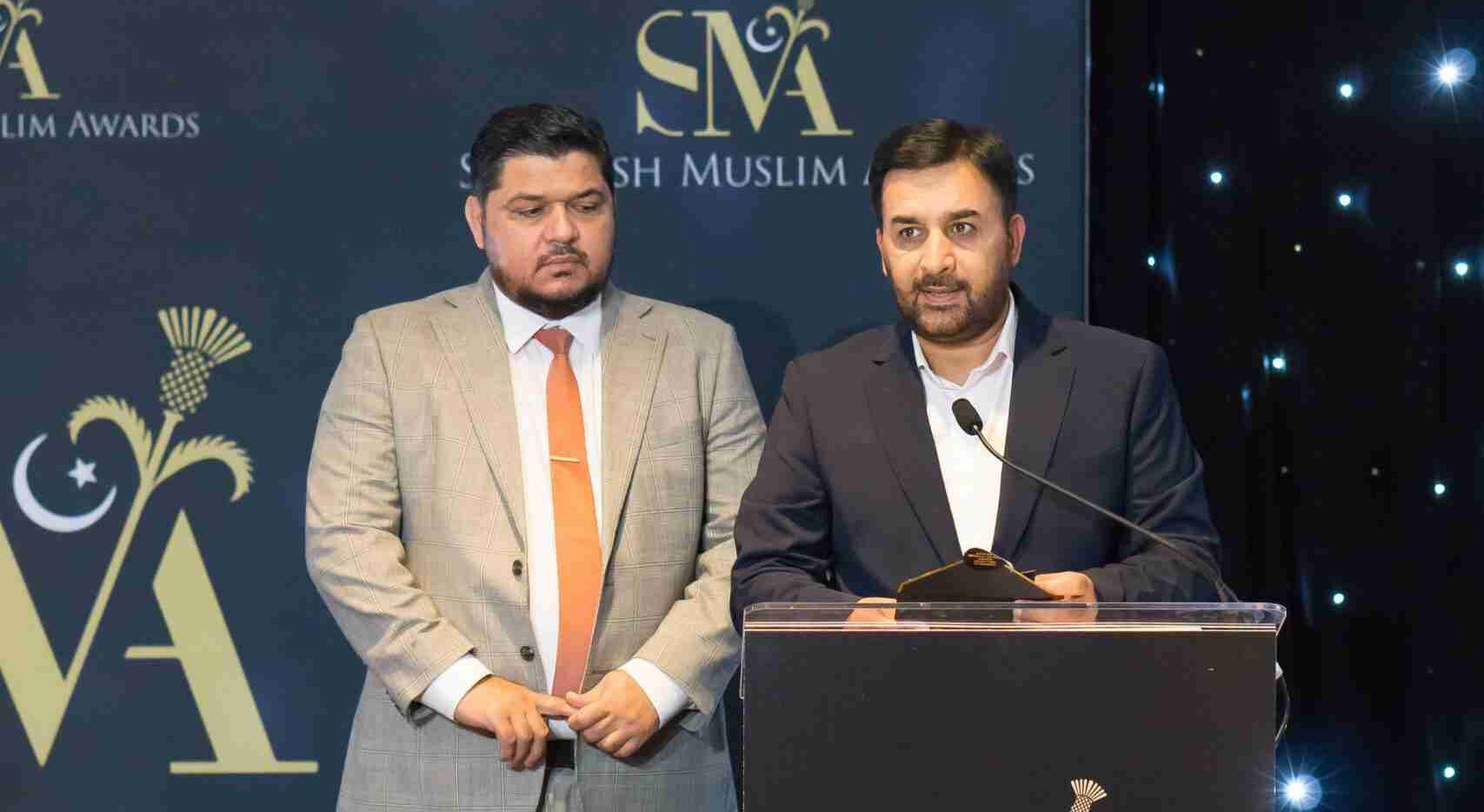
Aghosh UK Executive Director Abid Hussain speaking at the podium at the Scottish Muslim Awards 2026, alongside Co-Founder Fahim Kiani

Aghosh UK Executive Director Abid Hussain presents the Health Practice and Beauty award, alongside Co-Founder Fahim Kiani.

Aghosh UK was proud to take part in the Scottish Muslim Awards 2026, held on Sunday 27 September 2026, where our Executive Director, Abid Hussain, presented the Health Practice and Beauty award alongside our Co-Founder, Fahim Kiani. The award was won by Sofia Hassan, recognised for her contribution to health and beauty practice within the Scottish Muslim community.

The Scottish Muslim Awards bring together Scotland's Muslim communities once a year to recognise the achievements and talents of Scottish Muslims, and to celebrate the positive contribution those communities make to wider Scottish society. Being asked to present an award on the night gave Aghosh UK the chance to stand alongside that wider community effort, while continuing to share the story of our own work supporting orphans in Pakistan and Gaza.

Abid Hussain and Fahim Kiani presenting the Health Practice and Beauty award to winner Sofia Hassan on stage at the Scottish Muslim Awards 2026

Sofia Hassan receives the Health Practice and Beauty award from Abid Hussain and Fahim Kiani.


About the Scottish Muslim Awards

The Scottish Muslim Awards is an annual ceremony that recognises the achievements and talents of Muslims living and working across Scotland. The awards set out to identify role models from within Scotland's Muslim communities, in fields ranging from business and education to health, sport and community service, and to challenge Islamophobia by putting a spotlight on the positive contribution those communities make to Scottish life. Nominations are open to the public each year, with finalists and winners chosen across a range of categories before being celebrated at a ceremony bringing together community leaders, businesses and charities from across Scotland.

On Stage for Aghosh UK

  • Abid Hussain – Executive Director, Aghosh UK
  • Fahim Kiani – Co-Founder, Aghosh UK

Together they presented the Health Practice and Beauty award to this year's winner, Sofia Hassan.

Guests seated at the Scottish Muslim Awards 2026 ceremony

Guests from across Scotland's Muslim communities at the Scottish Muslim Awards 2026.

Why Aghosh UK Takes Part

Occasions like the Scottish Muslim Awards matter to Aghosh UK because they bring our team face to face with communities across Scotland who already give generously through Zakat, Sadaqah and regular sponsorships. Every conversation on the night, and every new supporter we meet, helps us reach further with our Orphan Care Programme, which provides orphaned children in Pakistan and Gaza with education, healthcare, nutritious meals and safe shelter.

Aghosh UK's Orphan Care Programme, at a Glance

Our Orphan Care Programme runs across the UK and, through Alkhidmat Foundation, in Pakistan and Gaza. It provides orphaned children with quality education, full healthcare, nutritious meals and safe shelter, so that losing a parent does not also mean losing a childhood.

Orphan Care Pakistan

Sponsorship starts from £30 a month and is Zakat eligible. More than 34,000 orphans have been supported through this programme to date.

Orphan Care Gaza

Aghosh UK is also working to sponsor 5,000 orphans in Gaza, with over 1,500 children already supported through the appeal so far.

The ballroom at the Scottish Muslim Awards 2026 ceremony, with the stage and screens in the background

The Scottish Muslim Awards 2026 ceremony in full swing.

Frequently Asked Questions

What are the Scottish Muslim Awards?

The Scottish Muslim Awards are an annual ceremony recognising the achievements and talents of Muslims across Scotland, celebrating the contribution Scottish Muslim communities make to wider Scottish society across categories including business, education, health and community service.

What was Aghosh UK's role at the Scottish Muslim Awards 2026?

Aghosh UK presented the Health Practice and Beauty award at the ceremony on 27 September 2026. Executive Director Abid Hussain and Co-Founder Fahim Kiani presented the award on stage.

Who won the Health Practice and Beauty award in 2026?

Sofia Hassan was named winner of the Health Practice and Beauty award at the Scottish Muslim Awards 2026.

What does Aghosh UK's Orphan Care Programme provide?

The programme provides orphaned children in Pakistan and Gaza with education, healthcare, nutritious meals and safe shelter, restoring a sense of stability and hope to children who have lost one or both parents.

How can I sponsor an orphan through Aghosh UK?

You can sponsor an orphan in Pakistan from £30 a month, or support an orphan in Gaza, through Aghosh UK's Orphan Care appeals. Both options can be set up as a single donation or a regular monthly sponsorship.

Is Aghosh UK a registered charity?

Yes. Aghosh UK is a registered charity, charity number 1178778.

Gaza Orphan Sponsorship: Jud Abdullah Al-Siqili Case Study

A Story of Loss, Resilience, and Hope: Jud Abdullah Mahmoud Al-Siqili
Gaza Orphan Case Study #2024-J09

A Story of Loss, Resilience, & Hope

Meet Joud Abdullah Mahmoud Al-Siqili — an 11-year-old girl from Khan Younis, Gaza, holding fast to her dreams of becoming a doctor and artist.

Khan Younis, Gaza
11 Years Old
Grade 5 Enrollee
Jud Al-Siqili
Click to enlarge

Jud Abdullah Mahmoud Al-Siqili — Khan Younis, Gaza

Case Profile At A Glance

Full Name

Joud Abdullah Mahmoud Al-Siqili

Age & Status

11 Years Old (Orphaned)

Education Level

Grade 4 (Passed with Excellence)

Next Academic Step

Grade 5 (UNICEF-Supported School)

Martyred Father

Abdullah Al-Siqili (Teacher, † May 30, 2024)

Mother / Guardian

Ghada Helmy Al-Siqili (DOB: 27 Aug 1979)

Sibling

Yazan (Brother, 15 yrs - Grade 9)

Current Residence

Khan Younis (Repaired Home Shelter)

Future Aspirations

Doctor & Fine Artist

An Unyielding Spirit in Gaza

Jud Abdullah Mahmoud Al-Siqili is an 11-year-old girl from Khan Younis, Gaza, whose childhood has been profoundly affected by loss, displacement, and difficult living conditions. Despite the immense challenges she has faced, Jud continues to pursue her education, nurture her creativity, and hold onto her dreams for a better future.

Jud's father, Abdullah Mahmoud Al-Siqili, was a dedicated teacher and an indispensable source of love, protection, and strength for his family. On 30 May 2024, he was martyred in a market in Rafah while obtaining essential supplies for his family.

"Losing him meant losing not only her beloved father, but also the person who provided her with emotional support, encouragement, and daily artistic inspiration."

A Special Bond With Her Father

Jud shared a remarkably close and loving relationship with her father. She was the person closest to him and deeply cherished every moment they spent together. Her father was not only a source of protection, but also the primary inspiration behind Jud's passion for art.

Jud loved drawing for her father, often asking him for ideas and guidance. His constant encouragement gave her the confidence to develop her artistic talents. Today, drawing remains one of her favorite activities — through her artwork, she continues to honor his memory and keep that special creative connection alive.

Visual Documentation

Jud's Journey in Images

Click any photo to view full size

Jud Al-Siqili
Jud Al-Siqili

The Meaningful Impact of Sponsorship

Sponsorship provides far more than vital material support; it offers Jud a sense of stability, hope, and dignity.

Educational Supplies

Stationery, notebooks, and essential school gear for Grade 5.

Art Materials

Drawing pads, paints, and pencils to nurture her artistic talent.

Essential Care

Clothing, nutritional support, and daily living necessities.

Back to School Du’as: A Muslim Parent’s Guide to the New School Year

Back to School Du'as: A Muslim Parent's Guide to the New School Year

بِسْمِ اللَّهِ الرَّحْمَنِ الرَّحِيمِ

In the name of Allah, the Most Gracious, the Most Merciful

Back to School Du'as: A Muslim Parent's Guide to the New School Year

Orphan Care Programme Pakistan

There is a particular kind of quiet that settles over a house the night before the new school year. Uniforms hung on the bannister. Shoes still stiff. A packed bag by the door, and somewhere upstairs a child who is either too excited to sleep or too anxious to admit they are anxious.

If you are a Muslim parent in the UK, you probably reach for the same two things at that moment: a plan, and a du'a.

This guide is about the second one. Below are the du'as we would encourage you to read with your children this September for knowledge, for confidence, and for the walk out of the front door. Each one comes with the Arabic, a transliteration, the English meaning and its source, so you can teach it rather than just recite it.

And because we work with children who have no school gate to walk through at all, we have been honest at the end about who they are and what happens when someone makes sure they get to sit an exam.


Why We Make Du'a at the Start of the School Year

In Islam, learning is not separate from worship. Seeking knowledge is itself an act of devotion which is why the very first word revealed to the Prophet ﷺ was Iqra: read.

That reframing is worth passing on to a child. A maths test is not just a maths test. Turning up, paying attention, and trying honestly is a form of worship. Making du'a before it is not a shortcut around the effort; it is the acknowledgement that effort alone was never what carried us.

So we make du'a at the start of the year for the same reason we make du'a before a journey. Not because we expect the road to be removed, but because we would rather not walk it alone.


Du'as for an Increase in Knowledge

1. Rabbi zidni 'ilma — "My Lord, increase me in knowledge"

رَبِّ زِدْنِي عِلْمًا
Rabbi zidni 'ilma
"My Lord, increase me in knowledge."
Qur'an 20:114 (Surah Taha)

This is the shortest du'a in this guide and, for a young child, the most useful. Three words. A four-year-old can learn it in an afternoon.

It is also worth knowing what makes it remarkable. In the Qur'an, Allah instructs the Prophet ﷺ to ask for an increase in very few things and knowledge is one of them. Not wealth, not status. Knowledge.

Teach your child that this is a du'a they can make anywhere: in the car on the way to school, before opening a book, in the two minutes before a test begins. It does not need wudu, a prayer mat, or a particular moment. It needs a moment of meaning it.

2. A du'a for knowledge that actually benefits

اللَّهُمَّ انْفَعْنِي بِمَا عَلَّمْتَنِي، وَعَلِّمْنِي مَا يَنْفَعُنِي، وَزِدْنِي عِلْمًا
Allahumma-nfa'ni bima 'allamtani, wa 'allimni ma yanfa'uni, wa zidni 'ilma
"O Allah, benefit me by what You have taught me, teach me what will benefit me, and increase me in knowledge."
Sunan Ibn Majah 3833

This one is for the older child; the Year 10 or Year 11 student who is starting to feel the weight of exams.

Notice the order. Before asking for more knowledge, it asks to benefit from what has already been learned. That is a distinction most revision timetables miss entirely. A teenager can memorise an entire specification and still not be changed by any of it.

If you have a child in a GCSE year, this is the du'a worth writing on the front of their folder.


Du'as for Confidence

Some children walk into a new classroom the way they walk into their own kitchen. Others need a moment at the gate. If you have one of each, you already know that "just be confident" has never once worked as advice.

Here is something that lands better.

3. The du'a of Musa (AS); for the child who is afraid to speak

رَبِّ اشْرَحْ لِي صَدْرِي وَيَسِّرْ لِي أَمْرِي وَاحْلُلْ عُقْدَةً مِنْ لِسَانِي يَفْقَهُوا قَوْلِي
Rabbi-shrah li sadri, wa yassir li amri, wahlul 'uqdatan min lisani, yafqahu qawli
"My Lord, expand for me my chest [with assurance], and ease for me my task, and untie the knot from my tongue, that they may understand my speech."
Qur'an 20:25–28 (Surah Taha)

Tell your child the context and this du'a stops being a formula and becomes a story they recognise.

Musa (AS) had a difficulty in his speech. He was then given the single most intimidating assignment in the Qur'an: go and stand in front of Pharaoh, the most powerful and most tyrannical man alive and speak.

He did not ask for the task to be taken away. He asked for four things:

  • Expand my chest: give me the courage to face it
  • Ease my task: make the thing itself lighter
  • Untie the knot from my tongue: let the words come out
  • That they may understand me: let me be heard properly

That is, almost exactly, what a nervous eleven-year-old needs before a class presentation. Courage, ease, clear words, and to be understood. A prophet asked for it in those words. Your child can ask for it in the same words.

This is the du'a for reading aloud in class, for a first day at secondary school, for a trial, an audition, an interview, an oral exam. It is the confidence du'a.

4. For the day that is simply hard

اللَّهُمَّ لَا سَهْلَ إِلَّا مَا جَعَلْتَهُ سَهْلًا
Allahumma la sahla illa ma ja'altahu sahla
"O Allah, there is no ease except what You make easy."
Sahih Ibn Hibban 2427 (via Hisn al-Muslim 139)

Short enough to say through gritted teeth. Useful for the parent as much as the child at 7:40am, when the tie is missing and nobody has eaten.


The Du'a for Leaving the House

If you take one thing from this guide, take this one. It is the most repeatable, and the easiest to turn into a habit that outlasts the school year.

5. Protection and guidance when stepping out

بِسْمِ اللَّهِ، تَوَكَّلْتُ عَلَى اللَّهِ، لَا حَوْلَ وَلَا قُوَّةَ إِلَّا بِاللَّهِ
Bismillah, tawakkaltu 'ala Allah, la hawla wa la quwwata illa billah
"In the name of Allah; I place my trust in Allah; there is no might and no power except with Allah."
Sunan Abu Dawud 5095

The narration continues with what is said in response to the one who says it: hudita, wa kufita, wa wuqita — "you have been guided, you have been sufficed, and you have been protected" — and the devils turn away from him.

Read that again as a parent sending a child out into a day you cannot supervise. Guided. Sufficed. Protected. There is not much else you would ask for.

How to make it stick: put it at the door, not in a book. Write the transliteration on a small card and tape it inside the door frame at your child's eye level. Say it together, out loud, every morning for two weeks. After that they will say it without the card, and after a term they will say it without you.


And a Du'a for You (The Parents)

Every list like this is written for children. This one is not.

6. Du'a for righteous offspring and comfort of the heart

رَبَّنَا هَبْ لَنَا مِنْ أَزْوَاجِنَا وَذُرِّيَّاتِنَا قُرَّةَ أَعْيُنٍ وَاجْعَلْنَا لِلْمُتَّقِينَ إِمَامًا
Rabbana hab lana min azwajina wa dhurriyyatina qurrata a'yunin waj'alna lil-muttaqina imama
"Our Lord, grant us from among our spouses and offspring comfort to our eyes, and make us an example for the righteous."
Qur'an 25:74 (Surah Al-Furqan)

Qurrat a'yun — "coolness of the eyes" is the Qur'an's phrase for the relief of looking at someone you love and finding nothing to worry about. It is, more or less, the entire ambition of parenting.

Make this one for yourself. Nobody else is going to.


Five Ways to Build Du'a into the School Routine

Du'as work best as furniture, not as events. A few things that hold up in a real household:

  1. One du'a per half-term. Six du'as a year, properly learned, beats twelve printed on a poster nobody reads.
  2. Teach the meaning first, the Arabic second. A child who knows they are asking for "the knot in my tongue to be untied" will reach for it when their voice shakes. A child who only knows the sounds will not.
  3. Say it in the car. The five minutes before drop-off is the most reliably unoccupied time in a school day. Use it.
  4. Attach it to a door, not a diary. Physical trigger, physical location. The door frame works because you cannot leave without passing it.
  5. Let them hear you make du'a for them. Out loud, by name. Children remember being prayed for far longer than they remember being advised.

For Millions of Children, the Barrier Isn't Confidence — It's a Classroom

Everything above assumes something quite large: that there is a school to go to.

In Pakistan, that assumption does not hold for more than 25 million children one of the largest out-of-school populations in the world, and close to a tenth of every out-of-school child on earth. Girls make up the majority: around 13.4 million girls, against 12 million boys.

The reasons are not mysterious. Distance, cost, floods that take the school building, displacement that takes the whole village.

And, very often, a death.

This is the part that rarely makes it into the statistics. When a father dies, a household does not simply become sadder it becomes poorer, immediately. School fees are the first line item to go, and the eldest child is often the first to leave the classroom, because at eleven or twelve they can earn something. A single bereavement quietly ends the education of everyone in the house.

That child is not less capable than yours. They are less funded.


Orphan Care High Performers

What Happens When an Orphan Does Stay in School

We would rather show you than tell you.

This summer, 81 children from the Islamabad area in Aghosh UK – Alkhidmat's Orphan Care Programme finished the year as high performers in Pakistan's national secondary exams the stage UK parents will know as GCSEs.

16 of them earned A+. 13 earned A.

It is worth pausing on who those 81 children are. Every one of them lost a parent. By every statistical expectation set out in the section above, most of them should not have been sitting a national exam at all. They should have been working.

Instead they sat the exam, and more than a third of them came out of it with an A or an A+.

Nothing exotic happened. Somebody paid the fees. Somebody bought the uniform, the books, the shoes. Somebody made sure that when a family lost a parent, the child did not also lose the classroom. That is the whole intervention. It is unglamorous and it is decisive.


Child Protection Centre

How Orphan Sponsorship Works

Sponsorship through Aghosh UK is £30 a month, or £360 a year. You can give Zakat too to support an Orphan.

That covers school fees, books, uniform, stationery and shoes, alongside healthcare and day-to-day care and you receive regular progress reports, so you follow a real child through a real school year rather than donating into the dark.

There is a reason education is the form of giving most often described as Sadaqah Jariyah, ongoing charity. A food parcel feeds a family for a month. A qualification changes what that family can earn for the rest of their lives, and the lives after that.

The Prophet ﷺ said:
"I and the person who looks after an orphan and provides for him will be in Paradise like this" and he put his index and middle fingers together. — Sahih al-Bukhari 6005

Not near. Adjacent. That is the closeness being described.


Du'a and Action

This September, you will stand at your front door and send a child out into a day you cannot control. You will say Bismillah, tawakkaltu 'ala Allah, and you will mean every word of it, because it is the only thing you have that reaches further than the school gate.

Somewhere in Islamabad, a child who lost a parent will walk out of a different door, in a uniform that somebody in Britain paid for, and make du'a of their own.

You do not get to hear that du'a. But it is being made, and if you are the reason they are dressed for school; a portion of it is about you.

Make du'a for your children. Then make it possible for someone else's.


Frequently Asked Questions

What is the best du'a for a child starting school?

For a young child, Rabbi zidni 'ilma ("My Lord, increase me in knowledge", Qur'an 20:114) — three words, easy to memorise. For a child who is nervous rather than merely new, the du'a of Musa (AS) in Qur'an 20:25–28 asks specifically for courage, ease and clear speech.

Is there a du'a for exam success?

There is no single "exam du'a", but two are especially suited to it: Allahumma-nfa'ni bima 'allamtani (Ibn Majah 3833), asking to benefit from what has been learned, and Allahumma la sahla illa ma ja'altahu sahla — "there is no ease except what You make easy." Both are best paired with revision, not substituted for it.

What should we say when leaving the house for school?

Bismillah, tawakkaltu 'ala Allah, la hawla wa la quwwata illa billah (Abu Dawud 5095). The narration states that the one who says it is guided, sufficed and protected.

What does £30 a month actually pay for?

School fees, books, uniform, stationery and shoes, plus healthcare and daily care through the Orphan Care Programme. Sponsors receive regular progress reports on the child they support.

Do I find out how the child I sponsor is doing?

Yes. Sponsors receive regular child progress tracking reports, including academic progress through the school year.

Can I give orphan sponsorship as Sadaqah Jariyah?

Yes — education is one of the most commonly cited forms of Sadaqah Jariyah, because the benefit continues long after the donation is made.

Be Like Ayaan: How an 11-Year-Old Raised Over £1,000 for Orphans in Gaza

Be Like Ayaan: How an 11 Year Old Raised £1,000 for Gaza's Orphans | Aghosh UK
Community Story

Be Like Ayaan: How an 11 Year Old Raised Over £1,000 for Orphans in Gaza

Published by Aghosh UK • 5 min read

Ayaan's Fundraising Stall for Gaza Orphans
Ayaan fundraising activity image 1

Most children spend the school holidays sleeping in, seeing friends and staying up too late. Ayaan spent his setting up a stall.

The eleven year old from Birmingham had an idea that was simple enough to explain in a sentence: sell sweets, books and toys, and give everything he made to orphaned children in Gaza. No committee, no campaign strategy, no fundraising experience. Just a table, a Palestinian flag, a collection tin, and a boy who had decided that something needed doing.

By the time he packed up, Ayaan had raised over £1,000.


Ayaan fundraising activity image 2

What Ayaan actually did

There was nothing complicated about it. He gathered things people would want to buy bags of sweets, books he'd finished with, toys that had been outgrown and set up outside on a sunny afternoon. He talked to people who stopped. He explained where the money was going. And people gave, because a child asking on behalf of other children is very difficult to walk past.

What made it work was not the scale of the idea. It was that he had one, and then actually did it.

Children fundraising for Aghosh UK

Why this matters more than the total

A thousand pounds is a meaningful sum. Through Aghosh UK's Orphan Care programme, it covers almost three years of care for an orphaned child in Pakistan food, shelter, healthcare and schooling. In Gaza, it sponsors more than twenty orphaned children through some of the hardest months of their lives.

But the number is not really the point of Ayaan's story.

The point is that a child looked at a situation thousands of miles away, understood that he was not powerless, and acted. That instinct the belief that you are someone who can do something is not automatic. It is learned. And it is usually learned young.

Ayaan has shown that children don't need to wait until they're adults to help others. With a caring heart, some determination and a good idea, they can make a genuine difference, inspire the people around them, and bring hope to children facing circumstances they will hopefully never have to imagine.

Eight ways your child could fundraise

If your son or daughter has been asking how they can help, here are ideas that have worked for young fundraisers before:

1. A bake sale

At home, at school, or after Jumu'ah at your local masjid.

2. Selling sweets or handmade treats

Exactly what Ayaan did.

3. A book and toy stall

A clear out that raises money twice over.

4. A sponsored walk

A set distance, sponsors per mile.

5. Selling artwork or crafts

Cards, bookmarks, painted stones, keyrings.

6. A sporting challenge

Laps, keepie uppies, a swim, a static bike ride.

7. Their own idea

Often the best one, because they'll actually see it through.

8. Getting friends and family involved

A group effort raises more and feels less daunting.

Fundraising also does something for the child doing it. It builds confidence. It teaches planning, budgeting and how to talk to strangers. It develops empathy in a way no lesson can. And it gives them the experience early, and for life of discovering that helping other people feels good.

How to set up a fundraiser in about ten minutes

You don't need to organise anything complicated to get started.

  1. Pick the idea. Let your child choose. Ownership matters more than ambition.
  2. Set up a fundraising page. Head to fundraise.aghoshuk.org and create a page in a few minutes. You can add a photo, write why you're doing it, and set a target. Donations come straight to Aghosh UK, so there's no cash to count, bank or worry about.
  3. Choose where the money goes. Orphan Care in Gaza, Orphan Care in Pakistan, Clean Water, or the Gaza Emergency Appeal your child can pick the cause that means the most to them.
  4. Share it. WhatsApp family groups, the school gate, your masjid, local community groups. Most fundraisers get their first donations from people who already know the fundraiser.
  5. Tell people what happened. Photos and a total at the end matter they're what makes the next child think I could do that.
"Set a target that feels slightly out of reach. Ayaan's £1,000 didn't arrive by accident; he was aiming at something."

What the money does

Every pound raised through Aghosh UK – Alkhidmat Foundation goes towards children who have lost the people who were supposed to protect them.

Donation AmountDirect Impact
£30 a monthSponsors an orphaned child in Pakistan education, healthcare, nutritious meals and safe shelter.
£42Sponsors an orphan in Gaza.
£360Covers a full year of care for one child.
Orphan Care Program Impact

Aghosh UK currently supports more than 35,000 orphaned children across Pakistan and Gaza. Each one of them was, at some point, added to that number by somebody who decided to help a monthly donor, a fundraiser, or an eleven year old with a stall.

A note for parents

If your child is fundraising in public, a few practical things: stay with them throughout, choose a spot you know well, and get permission from the venue or property owner in advance. If you're photographing the day for social media, decide together what they're comfortable with being shared. And keep the target realistic for their age the aim is that they finish the day proud, not exhausted.

Frequently asked questions

How old does my child have to be to fundraise?

There's no minimum age. Younger children simply need an adult to set up and manage the fundraising page on their behalf, and to supervise any activity that takes place in public. The page can still be in your child's name, with their photo and their story it's their fundraiser, you're just holding the admin.

How do I set up a fundraising page?

Go to fundraise.aghoshuk.org and create a page. It takes a few minutes. Add a photo, write a sentence or two about why you're fundraising, choose your cause and set a target. You'll get a link you can share anywhere.

Can we choose which cause the money goes to?

Yes. You can raise for Orphan Care in Gaza, Orphan Care in Pakistan, Clean Water, the Gaza Emergency Appeal, or wherever the need is greatest. Children often connect most strongly with sponsoring another child, because the outcome is easy to picture.

What if people give us cash on the day?

That's common with stalls and bake sales. Keep a simple record of what you take, then pay it in to your fundraising page yourself so the total shows in one place or contact the Aghosh UK team and we'll arrange for it to be paid in. Please don't post cash.

Do we need permission to hold a stall in public?

If you're on your own driveway or in your garden, no. Anywhere else a school, a masjid, a community centre, a shop forecourt, a park ask the person responsible for that space first. Most say yes when they hear what it's for. Street collections on public land usually need a licence from your local council, so a private venue is simpler.

What about Gift Aid?

If a UK taxpayer donates their own money and ticks the Gift Aid box, Aghosh UK can reclaim an extra 25p for every £1 at no cost to them. A £1,000 fundraiser could become £1,250. Gift Aid can't be claimed on money collected from a group and paid in by one person, or on payments for goods so it applies to sponsorship and online donations rather than sweets sold from a stall. More on our Gift Aid page.

How long should a fundraiser run for?

Two to four weeks is the sweet spot for an online page. Long enough for word to spread, short enough to keep a sense of urgency. A one day event like a stall or bake sale works well with a page opened a fortnight beforehand and left up for a week afterwards.

Can a school, madrasah or youth group do this together?

Yes, and group fundraisers often raise far more than individuals. A class, a year group, a scout troop or a Saturday school can all run a single page together. Get in touch and we can talk through the best way to structure it.

What if we don't reach our target?

Nothing happens except that some children get helped. Targets are motivation, not a condition. Every pound raised is passed on, whether you hit the number or not.

Can Aghosh UK support us with materials?

Contact the team and tell us what you're planning. We'll do what we can to help you make the day work.

Will you take the challenge?

It doesn't matter how much you raise. A bake sale that makes £40 and a stall that makes £1,000 come from exactly the same decision: that these children are worth doing something about.

Ayaan has shown that age is never a barrier to making a difference. If he can do it, your young person can too.

Be inspired. Be kind. Be like Ayaan.

Start your fundraiser today →

Or, if you'd rather support a child directly:

Share this story: #BeLikeAyaan

A Month of Reflection Honoring the Prophet’s ﷺ Legacy in Rabi Al-Awwal

A Month of Reflection: Honoring the Prophet’s ﷺ Legacy in Rabi Al-Awwal
Islamic Reflection & Guidance

A Month of Reflection: Honoring the Prophet’s ﷺ Legacy in Rabi Al-Awwal

Published in Rabi Al-Awwal • Reading Time: 6 mins

In the month of Rabi Al-Awwal in 570 CE, an event took place that altered the trajectory of human history forever: the birth of the Prophet Muhammad ﷺ. Sent to a world steeped in ignorance and injustice, he emerged as a beacon of truth, compassion, and moral perfection. Allah SWT sent him not merely as a regional leader or a temporary reformer, but as a universal mercy for all created beings.

Over 1,400 years later, we find ourselves standing in this very same blessed month. It comes as a gentle yet profound reminder to pause our fast-paced lives, look inward, and reflect on the person who dedicated 23 years of intense hardship, sacrifice, and devotion to ensuring that the message of Tawheed and Islam reached us intact.

وَمَا أَرْسَلْنَاكَ إِلَّا رَحْمَةً لِّلْعَالَمِينَ
"And We have not sent you, [O Muhammad], except as a mercy to the worlds."
— Surah Al-Anbiya (21:107)

The Prophet ﷺ planted and watered the seeds of Islam through immense endurance in Makkah and strategic wisdom in Madinah. Today, the most authentic way we can honor his lifelong commitment is not through mere rituals, but by actively reviving his teachings in our homes, strengthening our relationship with Allah SWT, and embodying his character in our daily dealings.

Understanding the Purpose of His Mission

The Prophetic mission was centered on transforming human hearts and societal ethics. He taught humanity how to connect with the Creator while serving His creation. From establishing justice and uplifting orphans to teaching the etiquettes of speech and personal hygiene, his guidance left no aspect of human life untouched.

When asked about his character, his beloved wife Aisha (RA) remarked, "His character was the Quran." To follow him is to live out the values of the Holy Book in practice.

4 Practical Challenges to Transform Your Rabi Al-Awwal

To turn this month into a turning point for your personal growth, here are four actionable challenges designed to bring his mission full circle in your daily life:

1. Revive One Small Sunnah Practice

The Prophet ﷺ said: "He who revives my Sunnah has loved me, and whoever loves me will be with me in Paradise." Transformation starts with small, consistent habits rather than overwhelming overhauls:

  • Post-Prayer Protection: Recite Ayat al-Kursi after every obligatory Salah without fail.
  • Night Routine: Perform Wudu before bed and lie on your right side while reciting the evening Adhkar.
  • Mindful Eating: Sit down while drinking water, say Bismillah, and use your right hand.
  • Intentional Smiles: Offer a warm, genuine smile to family and strangers—a Sunnah that carries the reward of charity.

2. Increase Your Daily Salawat (Durood Sharif)

Sending blessings upon the Prophet ﷺ is a unique command in the Quran where Allah SWT and His angels also participate. It grants peace to an anxious mind, erases sins, and brings answering to our supplications.

إِنَّ اللَّهَ وَمَلَائِكَتَهُ يُصَلُّونَ عَلَى النَّبِيِّ ۚ يَا أَيُّهَا الَّذِينَ آمَنُوا صَلُّوا عَلَيْهِ وَسَلِّمُوا تَسْلِيمًا
"Indeed, Allah and His angels send blessings upon the Prophet. O you who have believed, ask [Allah to confer] blessing upon him and ask [Allah to grant him] peace."
— Surah Al-Ahzab (33:56)

Action Step: Commit to a baseline target of 100 Salawat daily (e.g., Allahumma Salli 'Ala Muhammad). Utilize transition times during your commute, household chores, or work breaks.

3. Embody Prophetic Character (Akhlaq)

The Prophet ﷺ stated that he was sent primarily to perfect good character. Choose one specific aspect of morality to refine this month:

  • Patience (Sabr): Pause for 3 seconds before responding when provoked or frustrated.
  • Purity of Tongue: Consciously eliminate backbiting (Gheebah), sarcasm, and harsh criticism from your vocabulary.
  • Family Kindness: Show extra gentleness and assistance to parents, spouses, and children at home.

4. Dedicate Time to His Life Story (Seerah)

Love is built on knowledge; you cannot truly emulate someone you do not know. Dedicate just 10–15 minutes daily to studying his life, struggles, and interactions.

Whether you read an authentic Seerah book like Ar-Raheeq Al-Makhtum (The Sealed Nectar) or listen to an audio lecture series, studying his life will give context to the Quran and inspire resilience in your own trials.

Honoring His Legacy Through Action 🤲

Which challenge are you committing to starting today? Make your intention now, share it with family, and let this month mark a lasting transformation in your faith.

Share Your Intentions

Frequently Asked Questions (FAQs)

1. Why is Rabi Al-Awwal significant in Islamic history?
Rabi Al-Awwal is the third month of the Islamic lunar calendar. It holds immense historical importance as the month in which the Prophet Muhammad ﷺ was born, migrated (Hijrah) to Madinah, and ultimately passed away. It serves as a periodic reminder for Muslims to re-evaluate their connection to his teachings.
2. What is the spiritual significance of sending Salawat (Durood)?
Sending Salawat brings immense spiritual rewards. Hadiths mention that for every single Salawat sent upon the Prophet ﷺ, Allah SWT sends ten blessings upon the reciter, forgives ten sins, and raises their status by ten degrees.
3. How can I revive a Sunnah if I have a busy daily schedule?
Focus on micro-Sunnahs that require no extra time—such as making a conscious intention (Niyyah), smiling at others, saying Bismillah before tasks, eating with the right hand, or reciting short dhikr while traveling. Consistency in small acts is beloved to Allah SWT.
4. What are the best authentic sources to study the Seerah?
Recommended books include Ar-Raheeq Al-Makhtum (The Sealed Nectar) by Safiur Rahman Mubarakpuri and Fiqh us-Seerah by Sheikh Muhammad al-Ghazali. Reliable audio series by contemporary scholars are also great options for learning on the go.
5. How does reflecting on the Seerah help in daily problem solving?
The Seerah provides practical examples for every human role—leader, spouse, parent, friend, and merchant. Studying how the Prophet ﷺ handled hardship, betrayal, grief, and success gives believers a moral compass to navigate modern life's challenges.
6. What is the relationship between Sunnah and character (Akhlaq)?
Sunnah is not limited to physical rituals; it includes internal character traits like honesty, forgiveness, humility, and generosity. True adherence to the Sunnah manifests in how kindly one treats others.
7. How can we teach children the love of the Prophet ﷺ during this month?
Engage children through bedtime stories focused on his kindness to animals and children, practice small daily challenges together as a family, and create a warm environment where his life story is celebrated regularly.
8. Can we practice these Rabi Al-Awwal challenges throughout the year?
Yes, absolutely! Rabi Al-Awwal is meant to be a catalyst or a starting line. The ultimate goal is to build habits this month that continue permanently throughout the entire year.
Sources & References: Based on authentic Prophetic traditions recorded in Ṣaḥīḥ al-Bukhārī, Ṣaḥīḥ Muslim, Jamiʿ at-Tirmidhī, and established historical accounts of the Seerah (Ar-Raheeq Al-Makhtum).

When the Sky Goes Dark: What the Solar / Lunar Eclipse Prayer Teaches Us About Giving

Islamic Guidance & Reflection

When the Sky Goes Dark: What the Solar / Lunar Eclipse Prayer Teaches Us About Giving

Written by: Alisbha Shahzad | Aghosh UK

Sadaqah

Give voluntary charity to support vulnerable communities and earn lasting rewards.

£

When the Sky Goes Dark: Eclipse Prayer & Charity | Aghosh UK

There is a particular kind of stillness that falls over a place during an eclipse. The birds stop singing. The temperature drops. The light thins into something unfamiliar and slightly unsettling, even when you know exactly what is causing it. For a moment, something that has never once failed to rise or shine looks small, dimmed, humbled.

It is precisely that moment — the shrinking of something we take entirely for granted — that our tradition asks us to respond to. Not with a caption for social media. Not with cardboard glasses and a countdown. But with prayer, humility, and, as we will see, with our hands open in charity.

Solar Eclipse Diagram
During a solar eclipse, the Moon casts two shadows on Earth. The first shadow is called the umbra (dark blue oval). The second shadow is called the penumbra (light blue oval). During a solar eclipse, observers within the Moon's umbra experience a total eclipse, while those within the penumbra see only a partial eclipse. Source: National Aeronautics and Space Administration (NASA), Why Do Eclipses Happen? NASA Science, accessed July 9, 2026. Credit: NASA's Scientific Visualization Studio

A Prayer Born From Awe, Not Fear of the Sky Itself

The prayer performed during a solar eclipse is called Salat al-Kusuf (صلاة الكسوف). A solar eclipse in Islam is far more than an extraordinary astronomical event in the sky. The sun and moon are among the signs of Allah, and when an eclipse occurs, Muslims are encouraged to turn back towards Allah through prayer, dua, remembrance, and seeking forgiveness.

During the lifetime of Prophet Muhammad ﷺ, a solar eclipse occurred on the day his infant son Ibrahim passed away. Some people in the community associated the darkness in the sky with his loss, but the Prophet ﷺ immediately corrected this belief. He explained that the sun and moon are signs of Allah and do not eclipse because of anyone's death or birth. He instructed Muslims that when they witness an eclipse, they should pray and supplicate to Allah until it passes.

When the Companions once saw the sun darken, the Prophet did not explain it away with reassurance. He rushed visibly anxious straight to the prayer, dragging his cloak behind him, and stayed in prayer until the sky returned to normal. That single instruction from him has carried down the centuries as Salat al-Kusuf. It teaches Muslims to respond to an eclipse not with superstition, but by remembering Allah and renewing their devotion.

رَبَّنَا آمَنَّا فَاغْفِرْ لَنَا وَارْحَمْنَا وَأَنتَ خَيْرُ الرَّاحِمِينَ
"Our Lord, we have believed, so forgive us and have mercy on us, and You are the best of the merciful."
— Surah Al-Mu'minoon
Observing Solar Eclipse
Observing the awe-inspiring phenomenon of a solar eclipse reminds believers of the immense power and order of Allah's creation.

How to Pray the Solar Eclipse Prayer (Salat al-Kusuf)

Salat al-Kusuf consists of two rak'ahs, but its method is distinct from ordinary daily prayers. Within each unit, there is more than one bowing, and recitation is stretched out as long as a person can manage. It can be prayed individually at home, but gathering in congregation brings shared humility and united supplication.

First Rak'ah

  1. Make the intention to perform Salat al-Kusuf.
  2. Begin the prayer with Allahu Akbar.
  3. Recite Surah Al-Fatihah followed by a long recitation from the Qur'an.
  4. Perform a long ruku (bowing).
  5. Rise from ruku and say: Sami'Allahu liman hamidah, Rabbana wa lakal-hamd.
  6. While remaining standing, recite Surah Al-Fatihah again, followed by another recitation that is slightly shorter than the first.
  7. Perform a second ruku, shorter than the first.
  8. Rise from ruku.
  9. Perform two sujood (prostrations) as usual.

Second Rak'ah

  1. Stand for the second rak'ah and repeat the same pattern: Recite Al-Fatihah and Qur'an.
  2. Perform ruku.
  3. Stand again and recite Al-Fatihah and Qur'an.
  4. Perform a second ruku.
  5. Complete two sujood.
  6. Finish the prayer with tashahhud and salam.
Congregational Eclipse Prayer
Muslims gathering to offer Salat al-Kusuf in congregation, uniting in humility and seeking forgiveness during an eclipse.

What Dua and Dhikr Should You Read During a Solar Eclipse?

There is no single mandatory formula restricted specifically for a solar eclipse. Instead, the Sunnah encourages Muslims to spend the entire duration of the eclipse remembering Allah, asking Him for forgiveness, and supplicating sincerely.

You can repeatedly seek forgiveness by saying:

أَسْتَغْفِرُ اللهَ
"Astaghfirullah — I seek forgiveness from Allah."

Other essential forms of dhikr recommended during this time include:

  • SubhanAllah: Glory be to Allah.
  • Alhamdulillah: All praise belongs to Allah.
  • Allahu Akbar: Allah is the Greatest.
  • La ilaha illallah: There is no god worthy of worship except Allah.
Supplication and Remembrance
Turning to Allah with sincere heart, hands raised in dua and repentance as the darkness passes over the land.

Why the Prophet Stood Up and Spoke Afterwards

What is easy to miss reading descriptions of that historical day is what happened after the prayer ended. The Prophet stood, praised Allah, and delivered an address reminding the people of the moment's spiritual magnitude. Bound up in that reminder was a very specific instruction: give in charity.

The narrations mention the Prophet calling the people, in the aftermath of the eclipse, to sadaqah alongside dhikr, seeking forgiveness, and glorifying Allah. When something reminds us sharply that we are not in control, turning outward through charity bridges faith with action.

When the sun eclipsed, the Prophet told his Companions to do five key things:

  • Pray Salat al-Kusuf: Two rak'ahs with two bowings in each and long recitations.
  • Make dhikr: Takbir, Tasbeeh, and Tahmeed.
  • Make dua and seek forgiveness: Continue istighfar until the light fully returns.
  • Give charity: Sadaqah is highlighted side-by-side with prayer in authentic hadiths.
  • Do good: Engage in general righteous actions, from settling debts to repairing relationships.

What Not to Do During a Solar Eclipse in Islam

Islam explicitly liberates believers from superstitions, myths, and cultural folklore. During an eclipse, an eclipse should NOT be considered:

  • A sign that a particular person will pass away or be born.
  • A harbinger of bad luck or bad omens for pregnant women.
  • A source of magical or supernatural powers.
  • A reason to observe cultural superstitions unsupported by Islamic teachings.
Acts of Charity and Relief
Transforming moments of spiritual reflection into tangible aid by helping vulnerable families and communities in need.

From the Sky to the Ground: A Moment to Turn Back to Allah

The Sunnah gives us a response that doesn't end when the sky clears. A moment that humbles us should leave something lasting behind: extra dhikr on our tongues, a more mindful heart, and a hand open in giving.

Every pound given in genuine humility reaches someone living through their own literal or figurative darkness—a family in Gaza without a hot meal tonight, an orphan in Pakistan without care, or a community without clean drinking water. Through Aghosh UK's Sadaqah and emergency relief appeals, your response to Allah's signs becomes a direct lifeline for those in need.

Give Your Sadaqah Today

Support Aghosh UK – Alkhidmat Foundation during Solar/Lunar Eclipses, and let a moment of awe become a moment of impact.

Donate Now at aghoshuk.org

Solar Eclipse Prayer FAQs

What is the solar eclipse prayer called in Islam?
The solar eclipse prayer is called Salat al-Kusuf (صلاة الكسوف).
How many rak'ahs are in the solar eclipse prayer?
Salat al-Kusuf consists of two rak'ahs. In the Prophetic method, each rak'ah contains two periods of standing, two recitations of Surah Al-Fatihah, and two ruku (bowings) before going into sujood.
Is there a special dua for a solar eclipse?
There is no single compulsory or restricted dua specifically for a solar eclipse. Muslims are encouraged to make sincere dua in their own words, remember Allah, and seek His forgiveness.
Can I say Astaghfirullah during a solar eclipse?
Yes. Seeking forgiveness (istighfar) is strongly recommended during an eclipse. You can say Astaghfirullah repeatedly and offer sincere repentance to Allah.
What should I pray during a solar eclipse?
Perform the two-rak'ah Salat al-Kusuf, and spend the remaining duration of the eclipse making dua, dhikr, and istighfar.
Can I pray the solar eclipse prayer at home?
Yes, Salat al-Kusuf may be performed individually at home, though joining a congregational prayer at a local mosque is highly encouraged where available.
What should you not do during a solar eclipse in Islam?
Avoid myths, bad omens, and superstitions. Islam explicitly clarifies that eclipses are divine signs of Allah and are not caused by the birth or death of any human being.
When should Salat al-Kusuf be prayed?
The eclipse prayer is performed while the eclipse is actively taking place. The Prophet ﷺ instructed believers to pray and make dua until the sky completely clears.
Sources: Based on the hadith of the Eclipse Prayer recorded in Ṣaḥīḥ al-Bukhārī and Ṣaḥīḥ Muslim, and the established fiqh of Ṣalāt al-Kusūf as detailed in classical Ḥanbalī texts (Zād al-Mustaqniʿ) and the explanation of Shaykh Muḥammad ibn Ṣāliḥ al-ʿUthaymīn.

The Healing Power of Giving: Mental Health, Charity, and Compassion

The Healing Power of Giving: Mental Health, Charity, and Compassion
Mental Health & Community

The Healing Power of Giving: Mental Health, Charity, and Compassion

BF

Batool Fatima

Health Professional & Writer

In this ever evolving and speeding era of AI and obsession to upgrade our lives to social media standards, an emerging stream of unhappiness and un-satisfaction seems to be on the rise. As a practicing Muslim and a health professional working in the United Kingdom, I have seen first-hand how generosity can transform lives, not only materially but emotionally and spiritually. While conversations around mental health often focus on therapy, medication, and support services, we sometimes overlook a powerful source of healing that lies at the heart of our faith: giving to others.

Islam teaches us that charity (sadaqah and zakat) is more than a financial transaction. It is an act of mercy that connects us to one another and reminds us that no one should face hardship alone. Increasingly, research and lived experience show that helping others can also support our own wellbeing, fostering purpose, gratitude, connection, and resilience.

"Islam teaches us that charity is more than a financial transaction. It is an act of mercy that connects us to one another and reminds us that no one should face hardship alone."

This message felt particularly relevant at the Muslim Mental Health Summit 2026 organised by Muslim Council of Britain, held at the University of East London. Bringing together mental health professionals, community leaders, charities like Aghosh UK – Alkhidmat Foundation, and activists, the summit highlighted the growing need for a coordinated, faith-sensitive approach to mental health within Muslim communities. Discussions focused on practical solutions, collaboration between organisations, improved access to support, youth wellbeing, neurodiversity, and strengthening community services responses to mental health challenges. The event emphasised that mental health is not an isolated issue but one that affects families, communities, schools, charities, and humanitarian work alike.

It was encouraging to see this spirit of practical collaboration reflected in the presence of Aghosh UK at the summit. Through its stall, the organisation shared how its relief work in Pakistan and Gaza with Alkhidmat Foundation goes beyond meeting immediate material needs and seeks to restore dignity, stability, and hope to vulnerable children and families. Aghosh UK’s Orphan Care Programme supports children in Pakistan and Gaza through education, healthcare, food, family support, and long-term sponsorship, while its Aghosh Homes provide a safe and nurturing environment for orphaned children who may otherwise face insecurity, neglect, or social isolation. These forms of sustained care are deeply connected to mental wellbeing, particularly for children affected by bereavement, conflict, displacement, and poverty. During the summit, Aghosh UK’s Director for the South invited individuals, professional groups, charities, and community organisations to work collaboratively with Aghosh UK and Alkhidmat Foundation, recognising that meaningful support often requires humanitarian organisations, mental health professionals, and local communities to work together rather than in isolation.

Humanitarian Aid and Emotional Well-being

One area where mental health and charity intersect profoundly is humanitarian aid. Many of the beneficiaries supported by Muslim charities live in war zones, disaster-hit regions, refugee camps, and communities affected by extreme poverty. Whether in areas impacted by conflict, displacement, famine, or natural disasters, the psychological toll can be immense.

People living through these circumstances often experience anxiety, grief, trauma, depression, and chronic stress. Children may witness violence, lose family members, or endure prolonged uncertainty. Parents frequently carry the emotional burden of trying to provide stability while struggling to meet basic needs.

Although charitable giving cannot erase trauma, it can reduce some of the pressures that intensify mental distress. Access to food, shelter, healthcare, education, and community support helps restore a sense of safety and dignity. From a mental health perspective, hope is one of the most important protective factors against despair. When individuals know they have not been forgotten, they are often better able to cope with adversity and rebuild their lives.

The summit also highlighted the importance of moving beyond crisis responses and creating sustainable systems of support. Speakers discussed the need for greater coordination between charities, mental health providers, mosques, community organisations, and policymakers to address the growing mental health needs of Muslims both in the UK and internationally.

Supporting the Next Generation

Another group that deserves our urgent attention is teenagers. Across the UK, increasing numbers of young people are struggling with anxiety, loneliness, low self-esteem, social pressures, academic expectations, and uncertainty about the future. Social media has amplified both opportunities and challenges, often creating unrealistic comparisons and constant pressure to appear successful or happy.

For Muslim teenagers, there can be additional challenges around identity, belonging, Islamophobia, and balancing cultural expectations with modern life. The Muslim Mental Health Summit recognised young people as a key priority, encouraging communities to create safe, supportive spaces where they can discuss mental health openly without fear of judgement or stigma.

One practical way to support young people's wellbeing is through charitable engagement. Volunteering, fundraising, mentoring, and community service can provide teenagers with a stronger sense of purpose and belonging. Rather than focusing solely on their own struggles, they begin to see how they can make a meaningful difference in the lives of others.

I have worked with many young people who experienced a noticeable improvement in confidence and self-worth after becoming involved in charitable projects. Whether organising food-bank collections, supporting refugee families, or raising funds for humanitarian causes, these experiences help develop empathy, resilience, leadership skills, and social connection.

Giving Benefits the Giver

Importantly, giving benefits the giver as well as the recipient. When individuals engage in acts of kindness, they often experience a greater sense of fulfilment and meaning. In Islam, this is not surprising. Our faith teaches that caring for others strengthens the heart and draws us closer to Allah. Charity reminds us that our blessings are a trust and that true success is found not only in what we possess, but in what we share.

The key message I took away from the Muslim Mental Health Summit 2026 was simple but powerful: mental health is a collective responsibility. It requires collaboration, compassion, and action. Whether supporting a teenager struggling with anxiety, a family rebuilding after disaster, or a community affected by conflict and poverty, every act of care matters.

In a world facing growing mental health challenges, charity remains one of our most effective tools for promoting hope, resilience, and healing. Sometimes, the journey towards better mental health begins not with receiving help, but with extending a helping hand to someone else.

A Proud Milestone: 51 Palestinian Students Graduate in Pakistan

51 Palestinian Students Graduate in Pakistan | Aghosh UK
Gaza Emergency Response

A Proud Milestone: 51 Palestinian Students Graduate in Pakistan

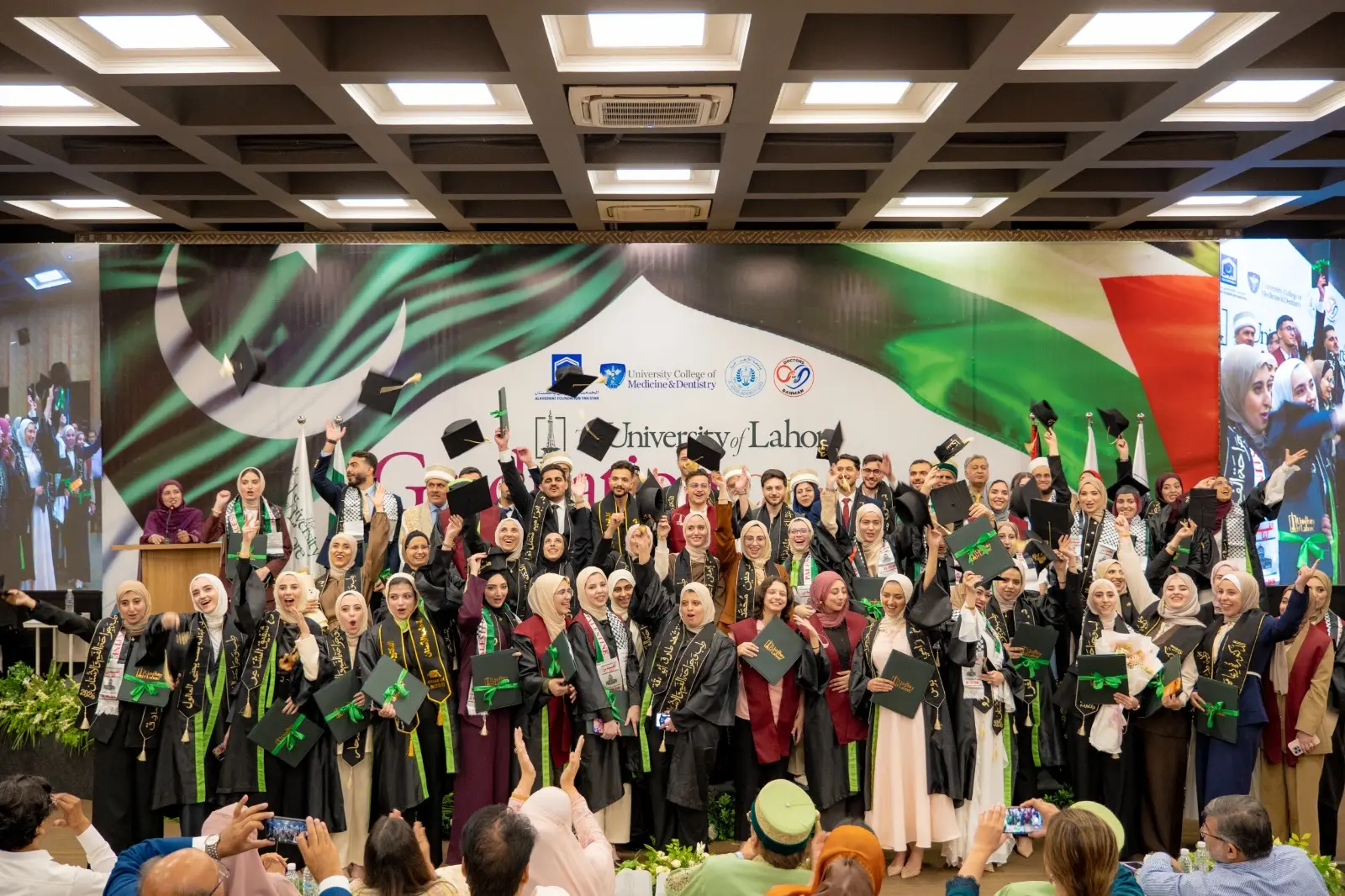
A graduation ceremony held at the University of Lahore has marked a proud milestone for Palestinian students who have continued their education in Pakistan throughout the war on Gaza. Of the 51 Palestinian BDS (Bachelor of Dental Surgery) students supported through the Palestinian Scholarship Programme run by Aghosh UK – Alkhidmat Foundation, 38 have now graduated, while the remaining 13 completed a one-year internship and received their certificates on the day.

Dr. Zuhair Mohammad Hamadallah Zaid, Ambassador of Palestine to Pakistan, attended the ceremony as Chief Guest, while Prof. Dr. Hafeez-ur-Rehman, President of Alkhidmat Foundation Pakistan, joined as Guest of Honour. University of Lahore leadership, senior academicians, and representatives of Aghosh UK – Alkhidmat Foundation were also present, with the Dean of Al-Azhar University, Gaza, joining online to share in the occasion.

In Their Own Words

The ceremony was a moving occasion, with speeches that captured both the weight of what these students have lived through and the hope their education represents.

"People see you as a young graduating dentist, but I see you representative of more than 73,000 martyrs and more than 2 million people who don't have a safe roof on the top. And still they are living, they are striving hard… Gaza is a land of resilience and knowledge."

— Prof. Dr. Hafeez-ur-Rehman, President, Alkhidmat Foundation Pakistan

"You are a brigade that you will go back to Gaza to serve our people there. This is your duty… There is many that they are waiting, not just the families that they are looking to you to see you, to hug you, but also the whole of our people waiting for your success, wanting you to come back."

— Dr. Zuhair Mohammad Hamadallah Zaid, Ambassador of Palestine to Pakistan

"Three years ago, we left Gaza carrying only one dream, to complete our education, no matter how difficult the path might be. My journey took me into three different places, shifting from Gaza to Turkey, then to Cairo, and finally to Pakistan… I am deeply grateful to Alkhidmat Foundation for their continuous support, guidance, and generosity, reminding us that compassion knows no borders."

— Ahmed, Palestinian graduate

Watch the Graduation Highlights

You can watch the full graduation ceremony here.

Education at the Heart of Our Gaza Response

For Aghosh UK – Alkhidmat Foundation, this ceremony is more than a graduation photo opportunity — it is proof of why human development sits at the centre of our Gaza response. Since October 2023, alongside the emergency food, water and medical aid we deliver every day, we have prioritised keeping Palestinian students in education, because a generation denied the chance to learn is a generation Gaza cannot afford to lose.

That commitment is already reaching thousands. Through the Palestinian Scholarship Programme and our wider education response, Aghosh UK – Alkhidmat Foundation and our partner, Alkhidmat Foundation Pakistan, are currently sponsoring 409 students studying inside Pakistan and 2,100 students inside Gaza — from undergraduates to the medical students who will go on to become the doctors their communities urgently need.

This is not the first time Aghosh UK has stood alongside these students at a milestone moment. Eight months ago, when an earlier cohort of 113 Palestinian medical students graduated, Dr. Adeel Riaz, Chairman of Aghosh UK, travelled to address that graduating class in person — you can watch his address here. It's a commitment Aghosh UK intends to keep showing up for, cohort after cohort, until every Palestinian student who wants to finish their education has the chance to do so.

Part of a Two-Year Response

This milestone sits within a much larger effort. Aghosh UK – Alkhidmat Foundation's two-year Gaza Emergency Response report shows that, since October 2023, we have delivered £21.55 million in aid to the people of Gaza — including over 354,000 hot meals, 65,000 food packs, 2.5 million bottles of water and 394 tonnes of medicines — alongside sustained support for 650 orphans and 2,100 sponsored medical students inside Gaza. Education, alongside food, shelter and healthcare, remains one of the pillars we are determined to protect for as long as this crisis continues.

354,000+Hot Meals
65,000+Food Packs
2.5MWater Bottles
394TMedicines
650Orphans Supported
2,100Gaza Medical Students

How You Can Help

Every one of these students, in Pakistan and in Gaza, depends on donors in the UK continuing to give. You can help sponsor the next generation of Gaza's doctors by supporting our Educate a Medical Student in Gaza appeal, or contribute to our wider Gaza Emergency Appeal, which funds food, water, shelter and medical aid alongside our education programmes.

Congratulations to all 51 students on this remarkable achievement. Their determination is a powerful reminder that even amid devastation, education remains one of the most powerful forms of hope Aghosh UK – Alkhidmat Foundation can help protect. May this milestone open the way to a future of service, success and hope for Palestine.

0
0
Donation Basket
Your cart is emptyMake another donation